
Let’s start by reiterating our commitment to promoting diversity, equity, and inclusion in our educational practices. As educators, we understand the significance of literature in shaping young minds and recognize the responsibility we hold in selecting appropriate reading materials for our students.
Holding this in mind, the last decade has thus seen a welcome shift in children’s book publishing. Around 2015, the number of books being written by diverse authors and those featuring diverse characters began to increase. By 2020 (only five years later), the number of books that were by or about a person of color had tripled. Last year, in 2023, here is what we saw:

Vs.

We can all agree that this is a welcome trend we’re seeing! But this really only matters if we also get our library, classroom, resource room, etc. collections up-to-date so that they are equally diversified. In case you want a refreshers on “Why We Need Diverse Books,” NEA sums it up really well.
As the year comes to a close and you work to inventory your current collection and order new books, this is an opportune time to review the contents of your library. Here are 4 tips to consider as you begin to diversify your collection:
1. A Diverse Collection = A Balanced Collection
Book collections should ideally be balanced in all areas of diversity regardless of student population. Instead of focusing on matching percentages of diverse books with your student population (which changes from year to year), I recommend you find a balance based on the number of books in your collection. For example, if your student population is 5% Latinx, you should not have 5% of your collection representing this population. Instead, aim for 10% of books to be representative of each population; all students deserve to have an equal opportunity to find a mirror book while white students deserve to have opportunities to pull a window book off the shelf. Read more.
2. Weed
A fast and easy way to help get your collection in balance is to weed (get rid of) books with white and non-human characters. Keep the ones of merit and that are fun and engaging. Have high standards and let go of the so-so titles and you will quickly see your collection becoming more balanced. Read more.
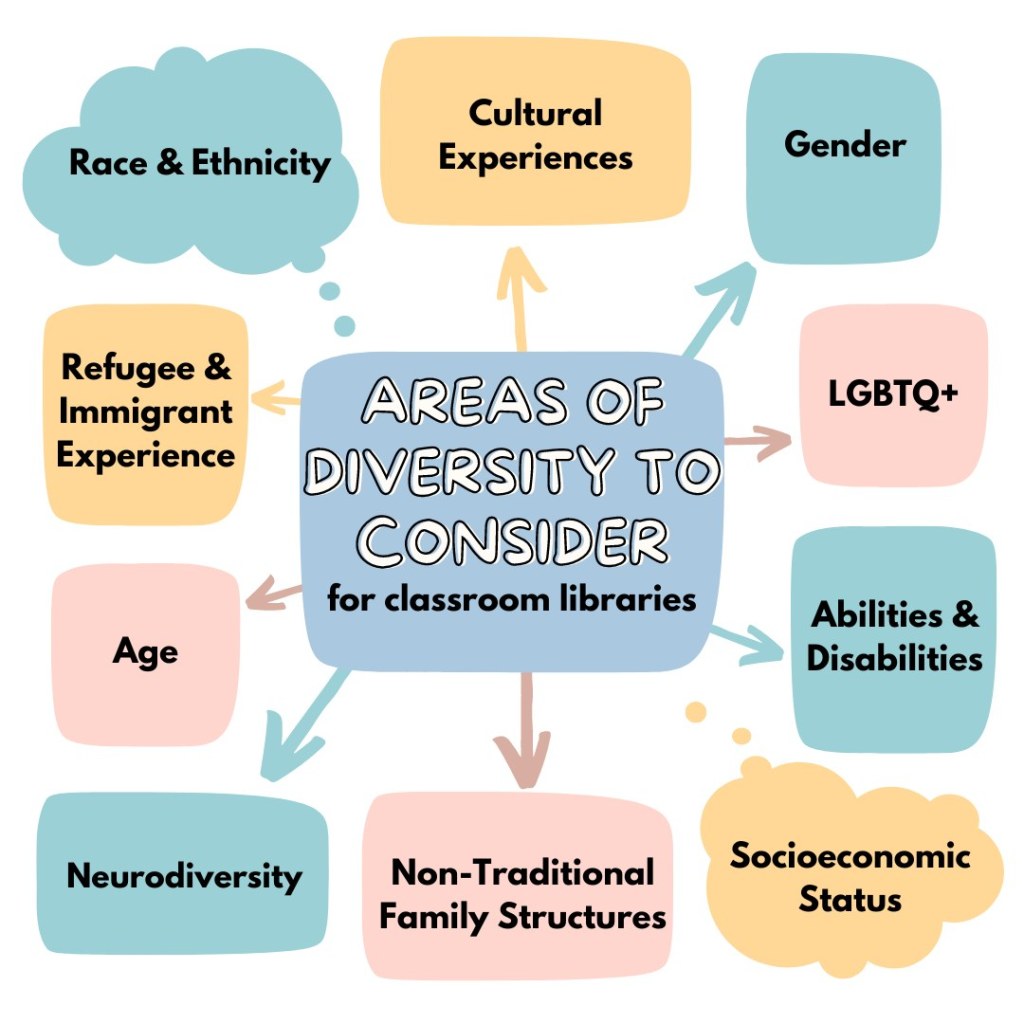
3. Consider ALL Areas of Diversity
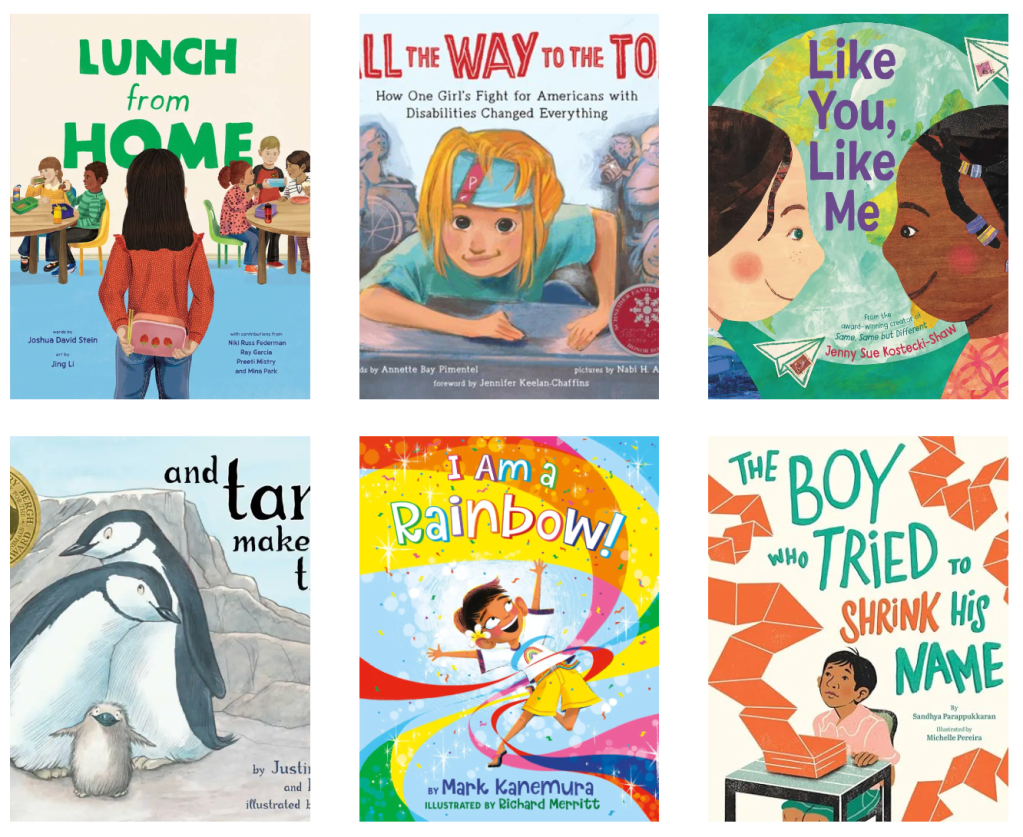
Now the fun part. Add new, diverse titles to your collection. This doesn’t just mean for book characters. Also think about authors, illustrators, and diverse subjects. Read more.
4. Avoid Pitfalls
While we respect the value of diverse perspectives in literature, it’s crucial to ensure that the books we provide do not perpetuate disparaging racial stereotypes. As educators, we must be mindful of the impact certain narratives may have on our students, especially those from marginalized communities. Make sure that all books avoid harmful representation & stereotypes. Read more.


 Rethink the Bell
Leave a comment